

Western Florida is a special place. Relaxed energy, sandy beaches, good food, and chill people. No stress. We went to Fort Myers to greet spring and meet people, but also to cure my phobia of giant fish, swamps, and weird waters.
So, you’re meant to challenge yourself, right? I carefully step out of the canoe, a slight give to the sand beneath my feet. I shiver. What on Earth am I doing this for?
Cut to three hours earlier: “I know you’re going to laugh and make fun of me, but consider it a gift from me to you, Anders.” My photographer’s eager smile nearly had me regretting it.
“I got scared as a kid by a book about fish. I know it sounds weird, but you should have seen that damn catfish slither across the whole page with its long barbels. I asked dad if there were any in the lake by our summer house, and in a teachable moment he read the book and said there certainly could be. I didn’t go swimming any more that summer. Instead, we watched horror movies on TV. Great. Creature from the Black Lagoon, dammit! What I’m trying to say is I have a deep-seated fear of dark waters, swamps, fish, and bodies of water in general.”
“So it’s a good thing we’re about to paddle through mangrove swamps, around catfish, saltwater crocodiles, and other sea monsters, isn’t it, Jonas?” Anders smirks at me.
So it’s a good thing we’re about to paddle through mangrove swamps, around catfish, saltwater crocodiles, and other sea monsters, isn’t it, Jonas?
“Right, and then out to fish for tarpon, a fish which hasn’t changed in millions of years and which looks like a mix between a T-rex and a garbage truck. It’s going to be great. Did I mention I get nauseous on boats, too…?”
Anders just smiles, shakes his head, and empties his coffee cup.
Postcard Paradise
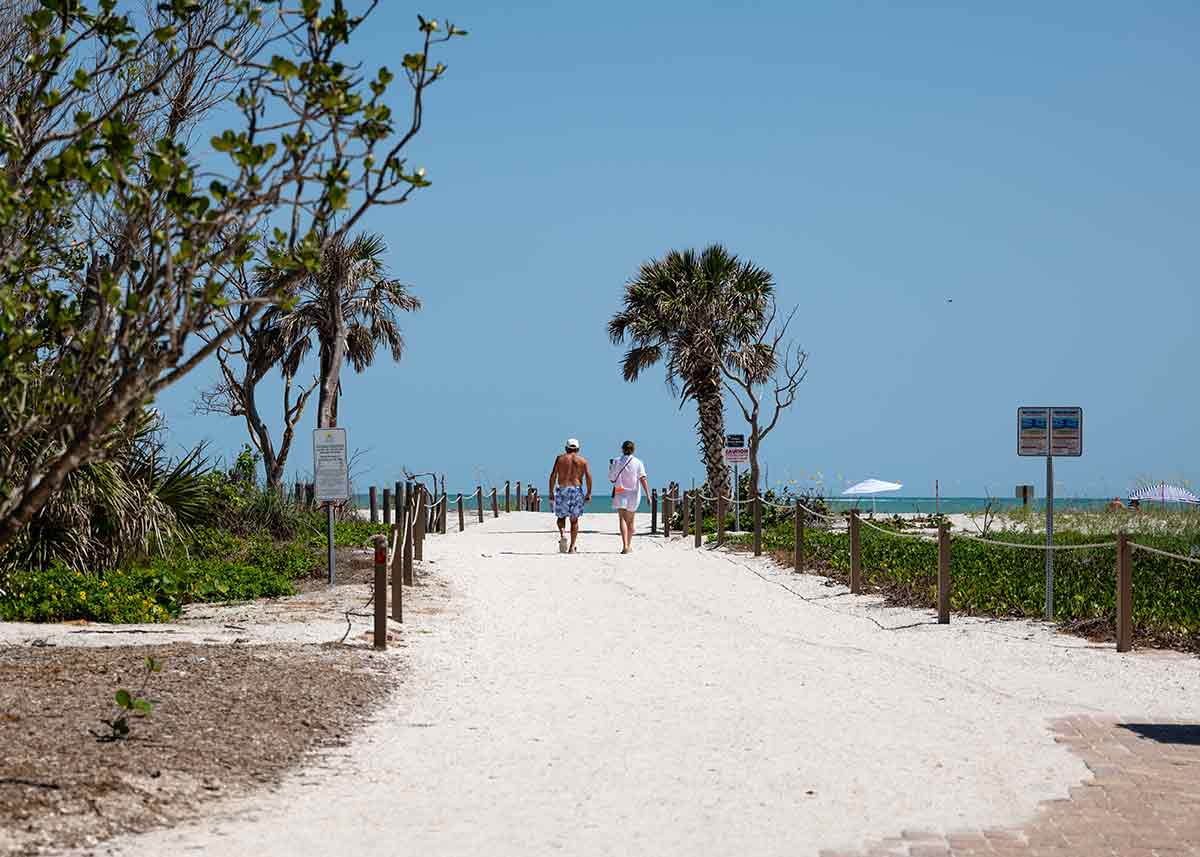
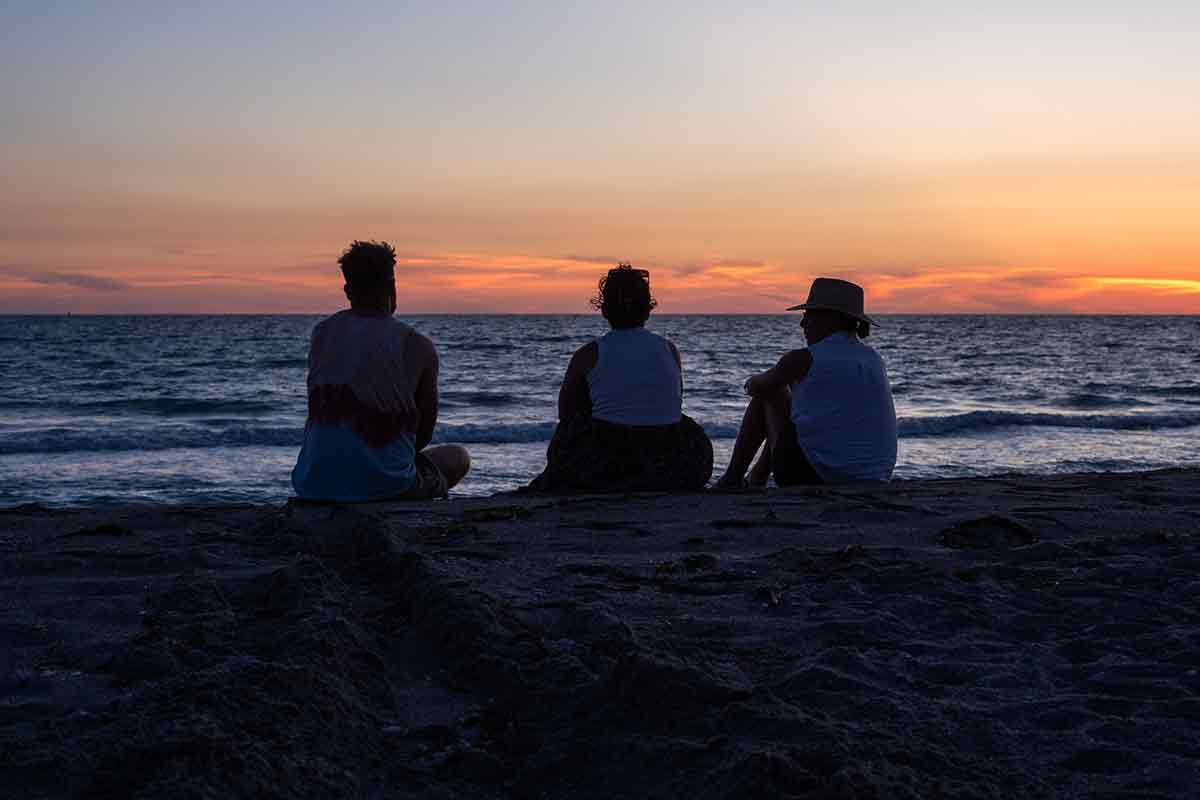
We’re in Fort Myers, on Florida’s west coast. The beaches are long, white. The water is warm, the air is warm, the drinks are cold and also delicious. We stand on the beach watching the sun set in the Gulf of Mexico with giant grins on our faces. Maybe one of the best sunsets I’ve seen. It’s my first time on this side of Florida, and I’ve been looking forward to it. No shade on Miami, I love it, but what I like here is the smaller scale of things, the people being so relaxed.
Fort Myers takes us by storm. Or maybe it’s that we just left one. Four dark months in the North leaves a mark. The warmth – from both sunshine and people – feels so good. Not everyone agrees. A lady gets into the elevator on the second floor, and when I say, “Nice and warm, huh?” she just says, “I hate this.” So much for small talk.
Inventors and Armies
Fort Myers was established for defense when the U.S. Government fought the indigenous Seminole in the Seminole Wars. The Fort got its name from Brevet Colonel Abraham Charles Myers. It also played a significant role in the Civil War.
In 1885, the perpetually bright Thomas Alva Edison visited Fort Myers. He came to like what had by now become small town. He bought land and built himself a winter estate. Edison also built a laboratory where he could work on his experiments. During World War I, Edison worried about the availability of imported rubber. With Harvey Firestone and Henry Ford, he managed to develop a rubber plant that could be grown in the U. S. A tire maker, a car maker, and a genius – of course they’d figure it out. Henry Ford got so enamored with the town that he bought the house next to Edison’s.
Today, Fort Myers is the county seat of Lee County and a large small town, or maybe a small big city. We can’t decide. It’s pretty big if you include suburbs, but the feeling is small-town. It’s nice, you run into the same people day after day. Fort Myers has character. For a town with lots of snowbirds and tourists, it’s managed to hold on to a genuine feeling and charm.
Mangrove madness
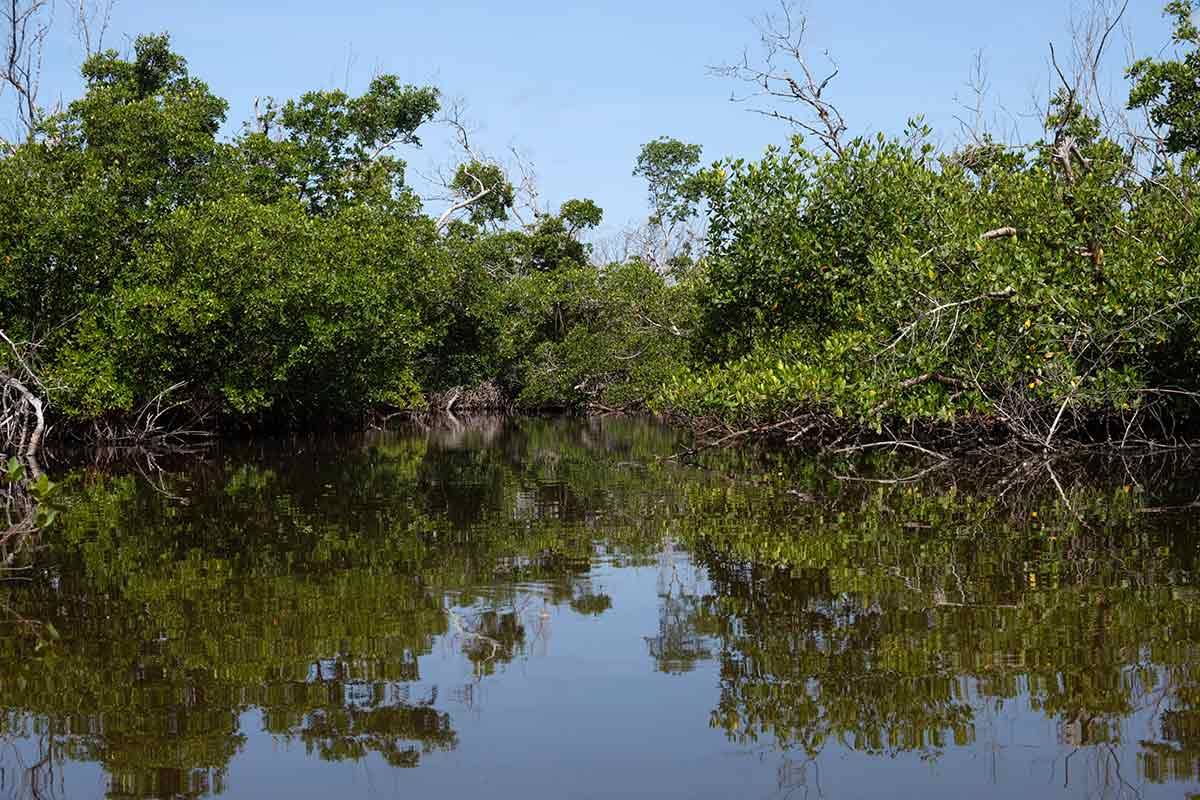
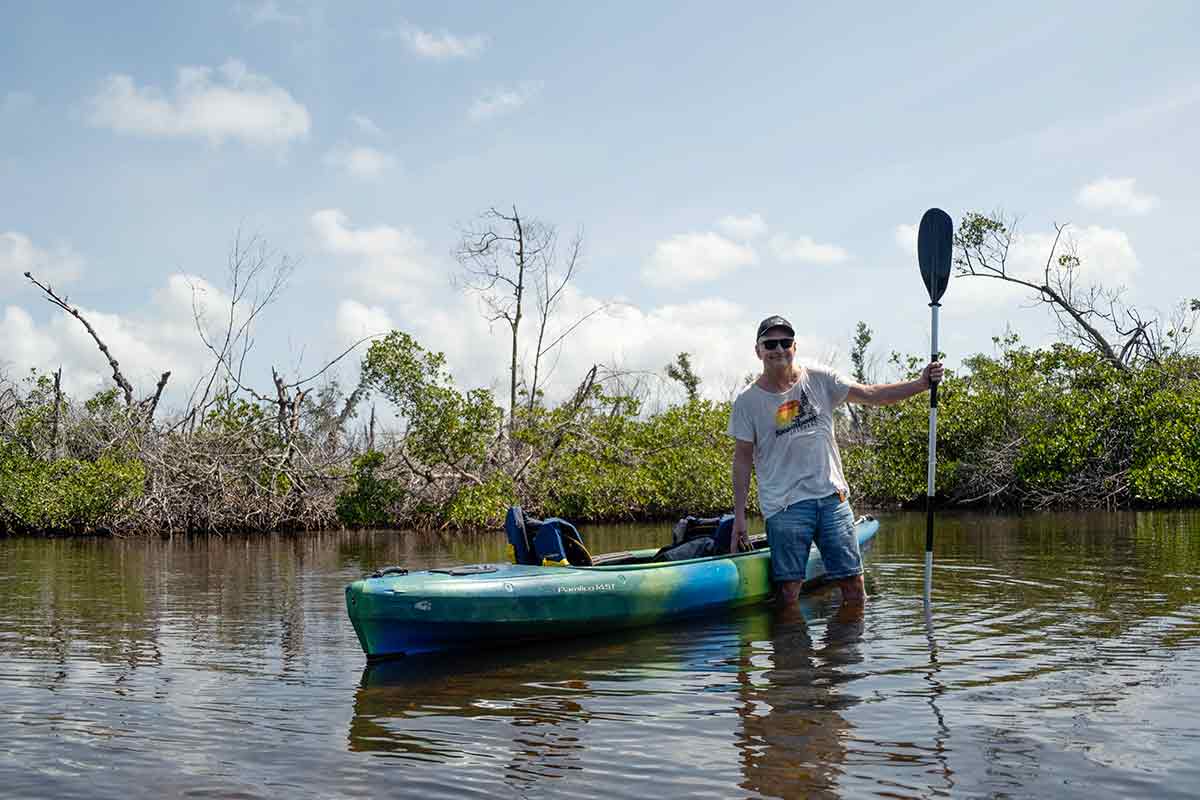
But back to me, standing in the mangroves, water to my knees. Anders is grinning, while I’m totally focused on catching any movement in the water. We had hoped to see the guardians of the mangrove forests – the mild-mannered, beautiful, and absolutely enormous manatees. But right now, I don’t want to see them or anything that moves in the water. The reason we’ve hopped out is that it’s so warm we wanted to cool our feet. At least that’s what Anders said.
“Alright, time to get back in the boat, we’re on a -schedule!” Do I see right through it? Sure, but it’s all in good fun.
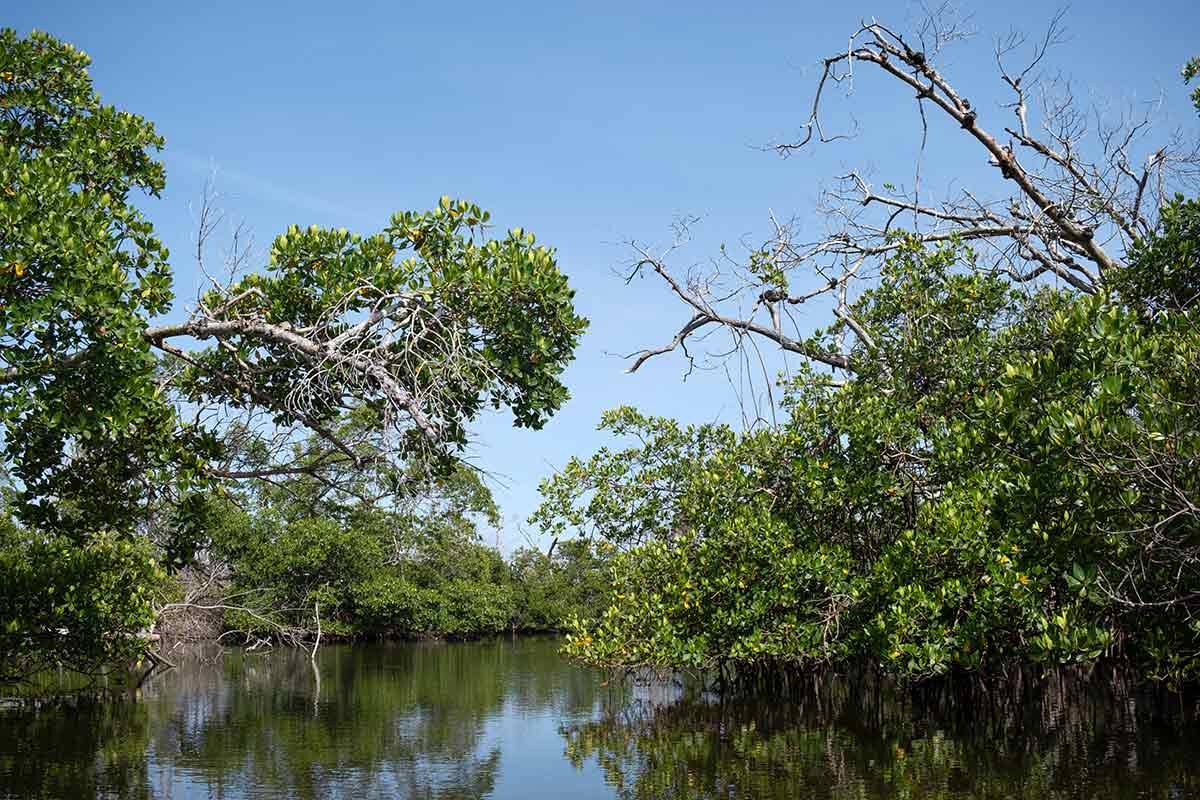
Despite my phobias, it’s always been a dream of mine to paddle through a mangrove forest. These swamps create mazes among the mangrove trees, roots reaching like powerful arms into the ground. We see oysters on the roots, which means it’s low tide. Sure, the route is clearly marked with signs. But our usual ”What’s the worst that could happen?”-attitude still has us ignoring them and happily weaving through the maze on a whim.
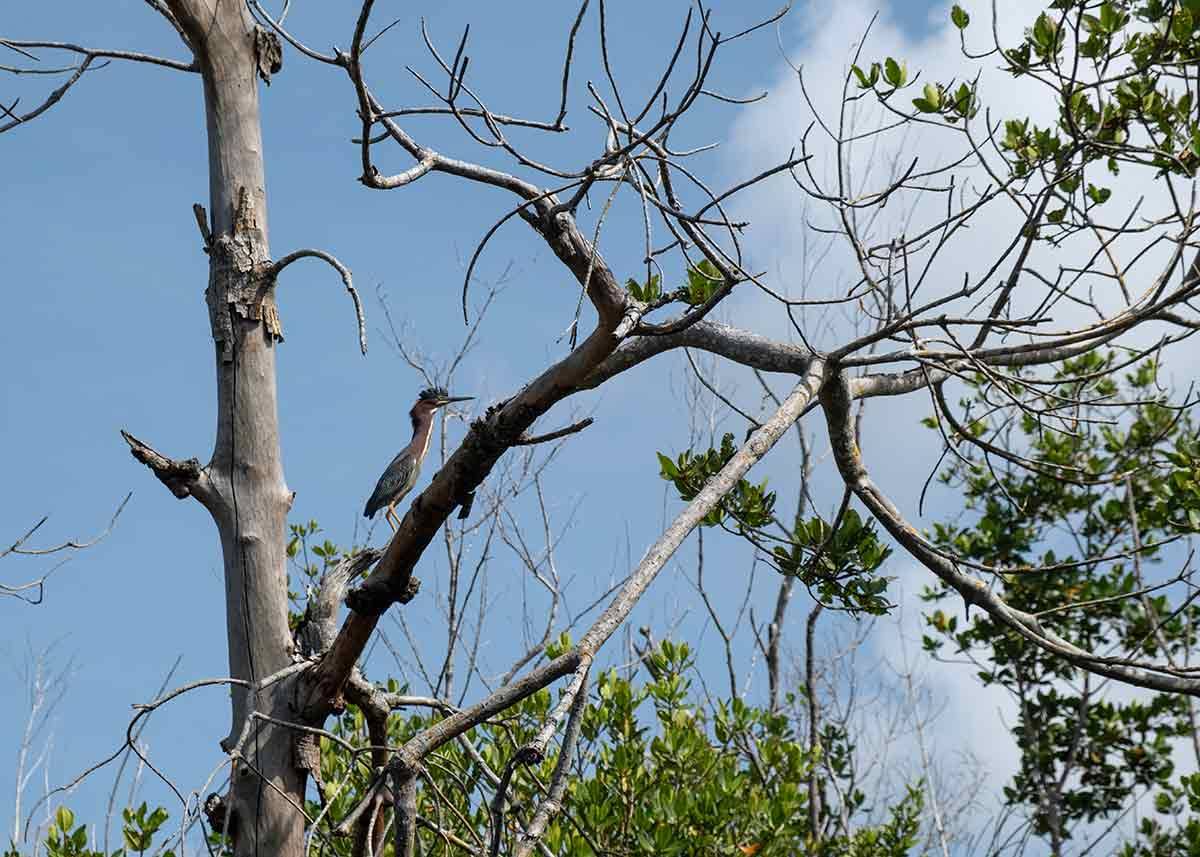
The winged wildlife is intense. Beautiful and crazy birds with big beaks observe us from the treetops. It’s really fascinating, but no manatees yet. No monsters, catfish, or saltwater crocodiles either, though, so that’s good.
We started early and were alone in the labyrinth, but now we’re meeting more and more people on their way in. We decide to follow the signs back. Pull up the boats, change our clothes. Sunburned, happy, and a little sore, we look out over the lagoon in front of the boat rental. Suddenly they appear: two enormous manatees. The skittish animals swim around the lagoon, almost like they wanted to show off. It’s amazing.
Now that I’ve faced my fears, I vow to come back and see them up close.


Captiva a charming escape
North of Sanibel is Captiva Island, a narrow, green island and a refuge from the busy mainland. We’re greeted by white beaches, swaying palm trees, and unrivaled sunsets.
Captiva has a relaxed, Caribbean atmosphere, with little art galleries, bike paths winding their way in between hibiscus and seaweed, and restaurants where you can sit with your bare feet in the sand and eat freshly caught fish. The island is known for its laidback tempo and proximity to nature; dolphins are often seen swimming near the shore, and pelicans glide over the bay like they own it.
It’s said that Captiva captures anyone who comes here – that’s how it gets its name. And it’s true: once you’ve seen the sun set in the Gulf of Mexico, you’ll always long to come back.
But sunset is still far away. It’s lunchtime. The best kind of lunchtime: margarita lunch. We’re parked at one of the island’s best bars, The Green Flash, each with a cocktail in hand.
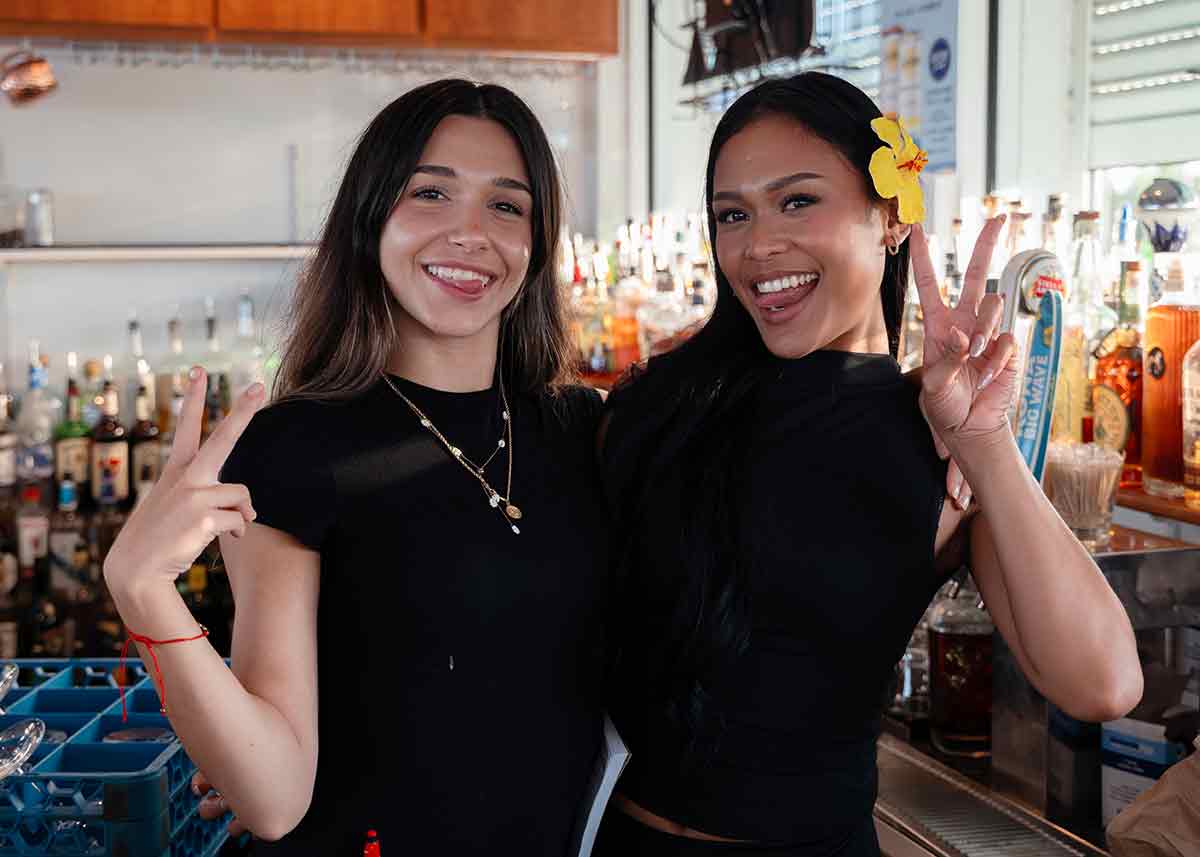
It’s a good name for a bar. Superhero vibes. Having made it through the mangrove maze I feel like a bit of a hero myself.
My grilled prawns arrive on a bed of spinach. Onion, pine nuts, and spinach in a bacon and mandarin dressing make the prawns soar. Further proof that American food is more than just burgers and fries.
Fishing for the Silver King
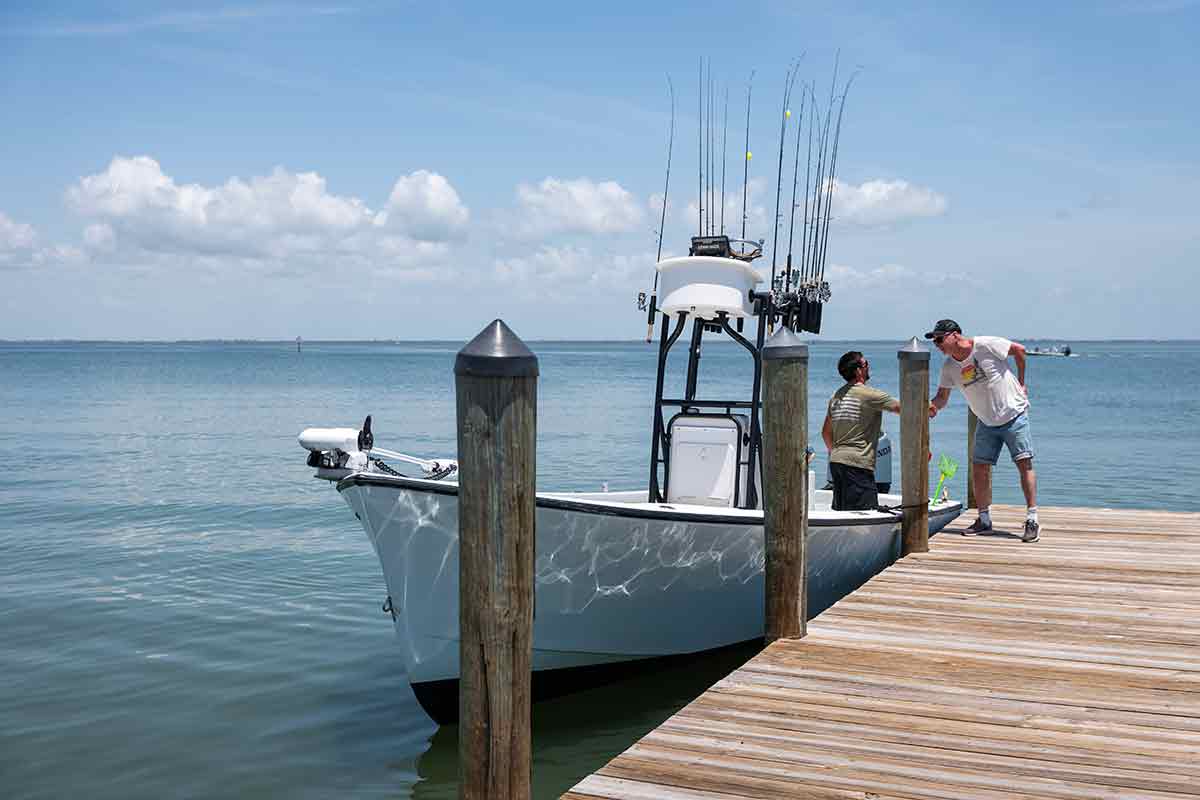
Out on the water, a boat is quickly approaching. It’s our fishing guide Andre coming to pick us up. We meet him on the dock next to the restaurant.
“Hey guys, ready for some fishing?” We are. We jump on board, and Andre casts off. “Alright guys, hold on tight, we’re about to speed up. We have a ways to go so I’m going to crank it.”
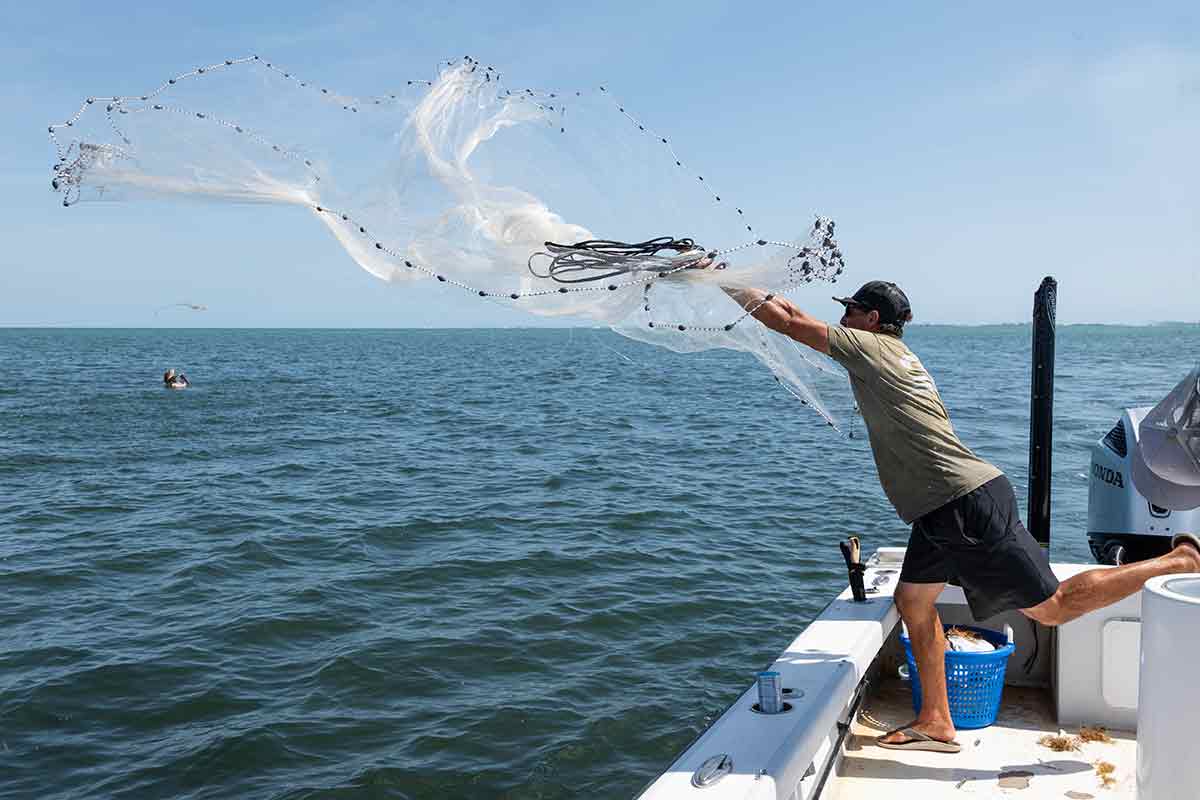
We smile wide and hold on. Bouncing across the waves in the 85-degree heat feels great. We look out over turquoise waters and long, bright white beaches with their palm trees waving. Andre slows down and takes us to shallower waters, a sandbar in the middle of the bay. He brings out a net and throws it with an experienced hand. “It’s in the hip,” he says. “It’s like playing golf, you have to get your hip into the throw.” Soon, the net is back up again, gleaming with little fish which are quickly dumped into the livewell.
“How do you know where to find the baitfish?”
“I look to see where the birds are feeding, there’s always fish there,” he says.
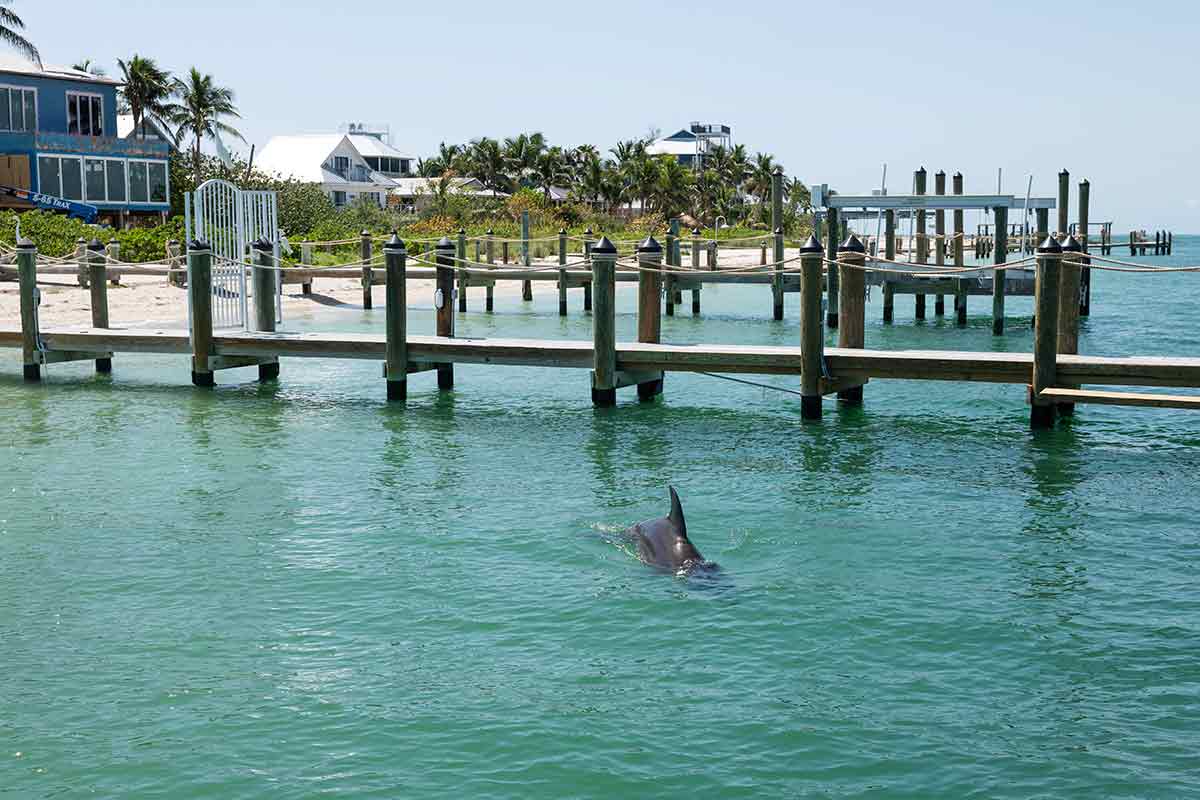
“Oh look!” I exclaim. “A dolphin!”
“He’ll ruin our fishing,” Andre says.
There’s a tug at my line, I tug back and can feel that the fish is on the hook. As I’m reeling it in, the dolphin suddenly appears and tries to take my fish. I pull up so the fish jumps above the surface, the dolphin quickly follows but misses. I get the fish into the boat – a six-pound spotted seatrout. Nice fish, but we have to return it to the sea, right?
I let it go into the water – where it immediately turns into dolphin lunch. The opportunistic dolphin had been waiting, ready for us to throw it back in. Smart.
A dream job
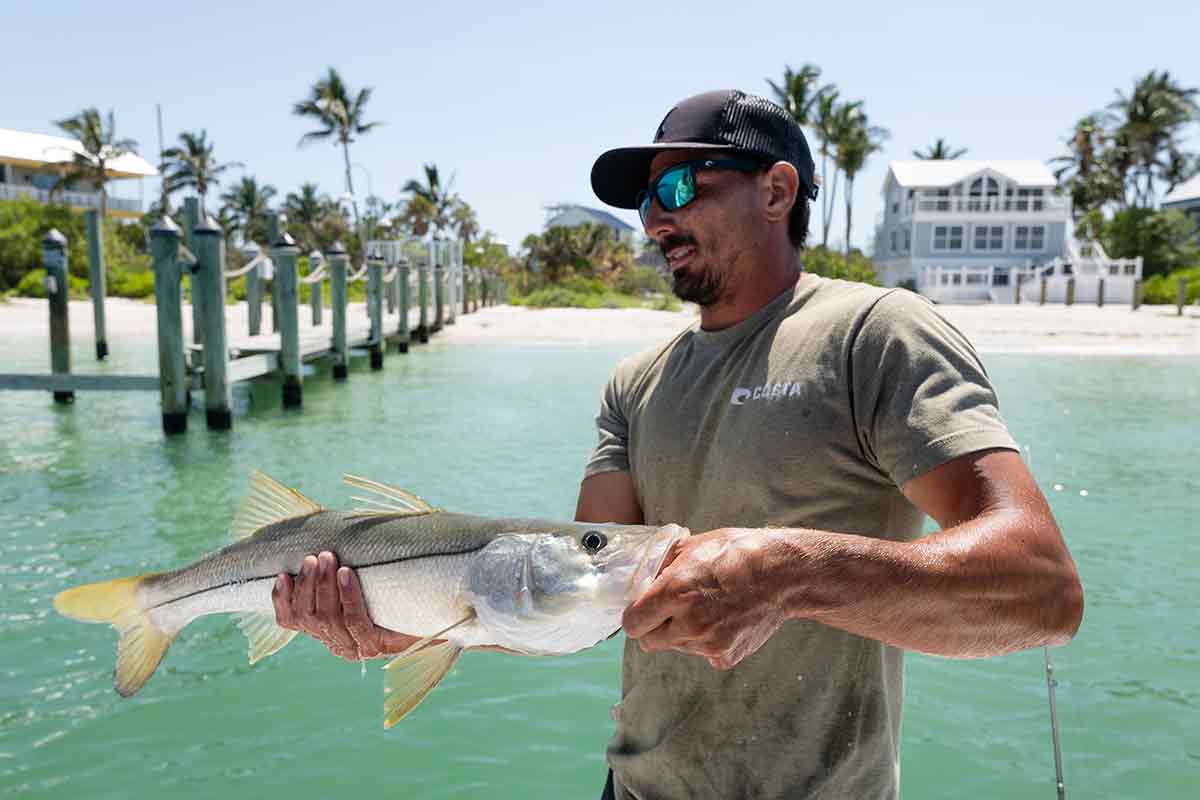
We try another couple of spots. Anders and I both catch plenty of fish of a few pounds, but without our guide we would have had a tough time. Andre loves fishing and knows exactly where they wait. He looks offensively good and healthy, and he’s deathly serious about fishing. He tells me that he’s been fishing since he was a kid, and now he works as a fishing guide with his own boat. The dream job.
It turns out this was only a warm-up. It’s time to try for the real fish: tarpons. This ancient monster can weigh up to 280 pounds and reach 8 feet in length.
There’s something undeniably dramatic about the tarpon. Its slender, silvery body and acrobatic moves have earned it the nickname, the “Silver King” – king of sport fishing. The Atlantic tarpon (Megalops atlanticus) is one of only two species in the Megalopidae family, and it’s been swimming the seas for over 100 million years. There were tarpon-like fish swimming around during the age of the dinosaurs.
In the 19th century, it became popular among sport fishermen. Back in 1885, the American architect William Halsey Wood caught a 93-pounder in southwestern Florida. That’s the first documented tarpon catch by fishing rod.
Around the turn of the 20th century, the tarpon was more than just a fish. It was a phenomenon. Fishing guides, small boats, enthusiasts from the North coming to Florida for tarpon season – it was as much a ritual as it was a sport.
It’s not just about the size. It’s the jumps, the flicks of silver beneath the surface, and the long, intense battle that makes every catch unforgettable. As a veteran fisherman once said, “Catching a tarpon feels like getting hit by lightning – and living to tell the tale.”
Today, most tarpon are released after being caught. They’ve become symbols of sustainable fishing.
The Silver King season is here
And they’re in season. Even from a distance, we spot 50 or so boats. They’re like the birds showing Andre where to cast his net. We settle in the sound and bait the hooks with little crabs.
“Let them sink all the way to the bottom, and be ready if you feel a tug,” Andre says. A few giant fish break the surface and leap into the air just a few feet away from the boat. Adrenaline shoots through our bodies. The fish gleam like silver. They’ve very, very large.
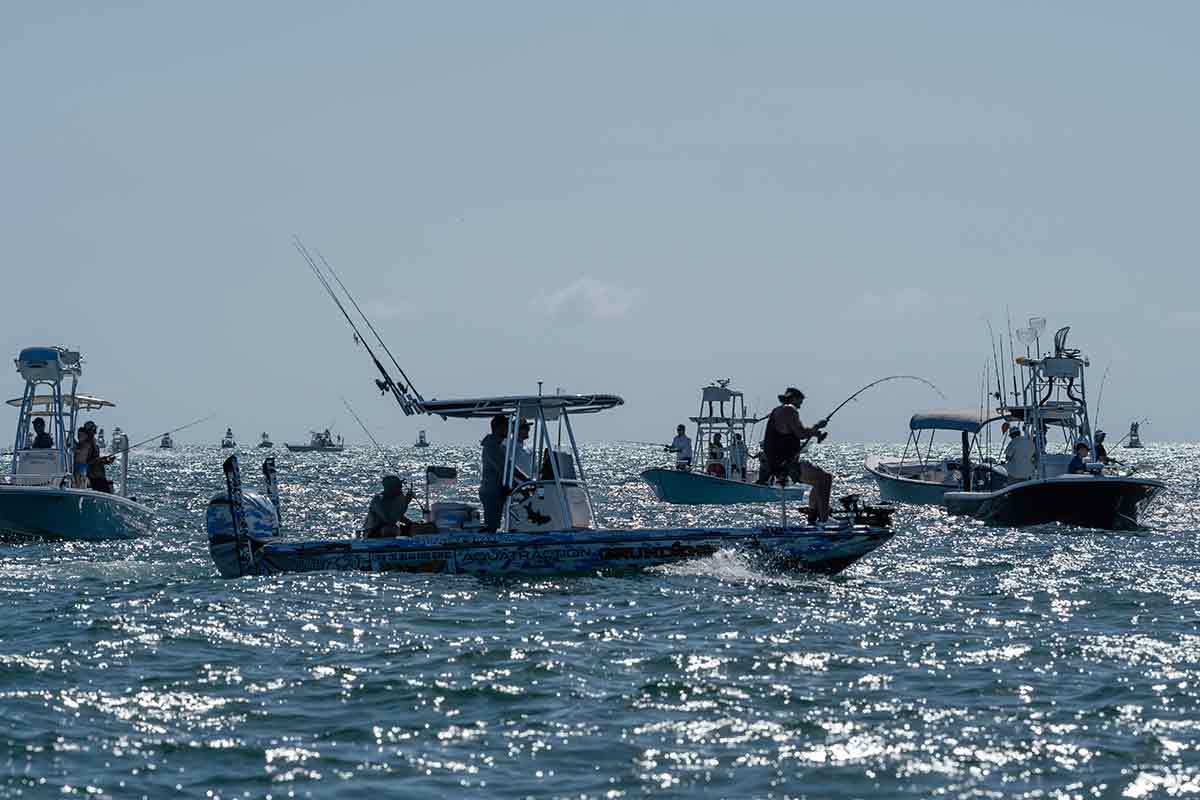
The ilusive tarpon
But the tarpons seem to enjoy teasing us. They leap and splash between the boats, often as many as five or six at a time. Still, not a single boat seems to get lucky. But then, suddenly, a guy in the next boat over catches something. His fishing rod warps into a bow, and it’s clear he’s making a huge effort. We and others in the nearby boats follow the show with a mix of envy and excitement. After about 20 minutes, the fish breaks free. But on the boat, it’s all smiling faces and high fives.
We’ve been out a long time before blasting back to shore. We fared pretty well – and what a day Andre treated us to. By evening, we’re back in Fort Myers. We sit at Ford’s Garage, a bar on 1st Street, in the city’s downtown bar and restaurant district. A T-Ford hangs above the bar (with Firestone tires, of course). Around the corner is the Edison Theater, a former movie theater in art deco style.
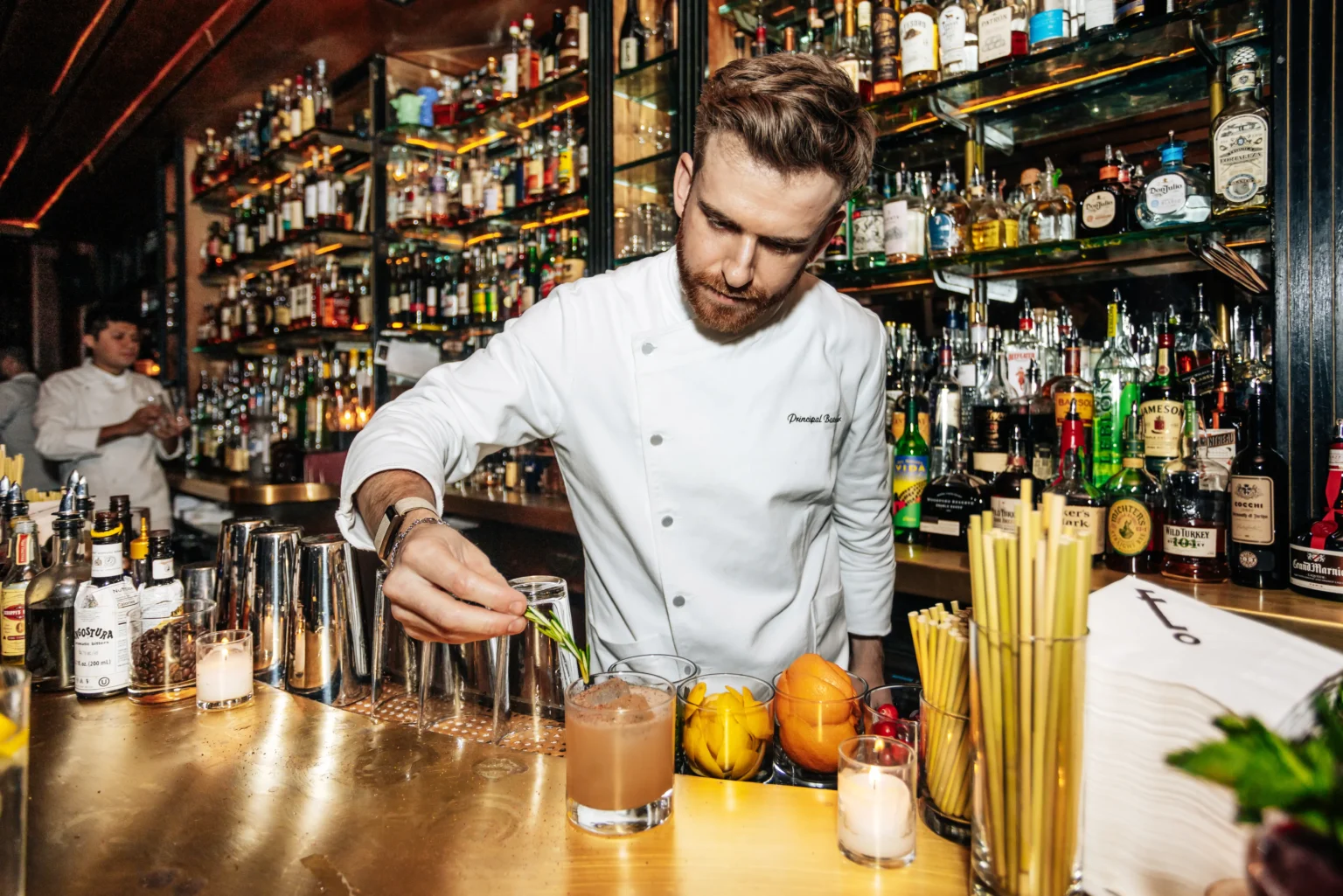
We order chicken wings, grilled salmon, and a Smoked Old Fashioned each, raising a glass to the three inventors. But what we would really like to do is toast the guy who invented the ice rail along the bar which keeps our cocktails cold.
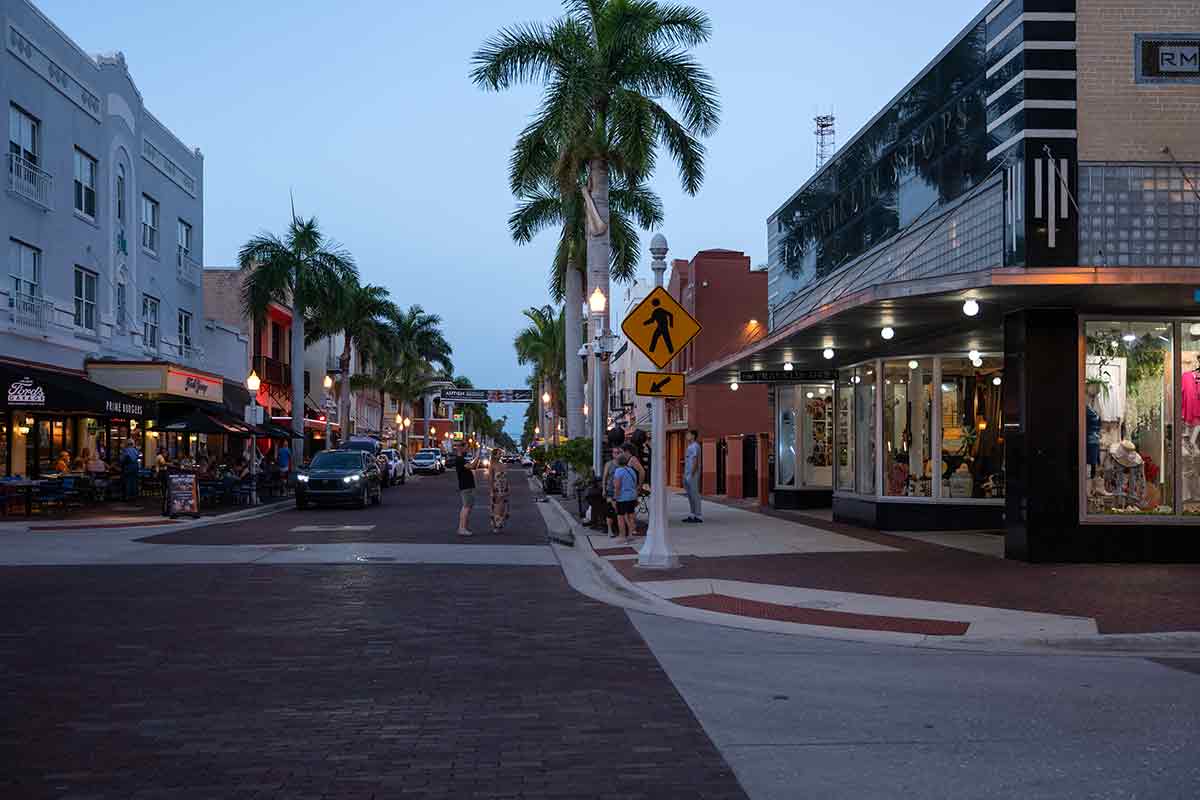
Downtown Fort Myers.
Do you want to know more about Fort Myers? Click here!


-
Subscription
$70.85 -
 Out of stock

